


AI tools for content creation have completely changed how I work. Gone are the days of staring at blank screens for hours or spending entire weekends crafting blog posts.
I’ve tested dozens of AI solutions over the past few years, and honestly, most aren’t worth your time. Many promise the moon but deliver generic, robotic content that needs more editing than if you’d written it yourself.
Instead of hyping up tools I barely use, this article features the 13 AI content creation tools I actually rely on daily in 2025. From writing assistants that help me break through creative blocks to video generators that cut my production time in half, these tools have transformed my workflow.
Whether you’re a solo content creator drowning in deadlines or a marketing team trying to scale output without sacrificing quality, this honest breakdown will help you find the right AI tools worth your investment. Let’s dive into the options that actually deliver results.
ChatGPT
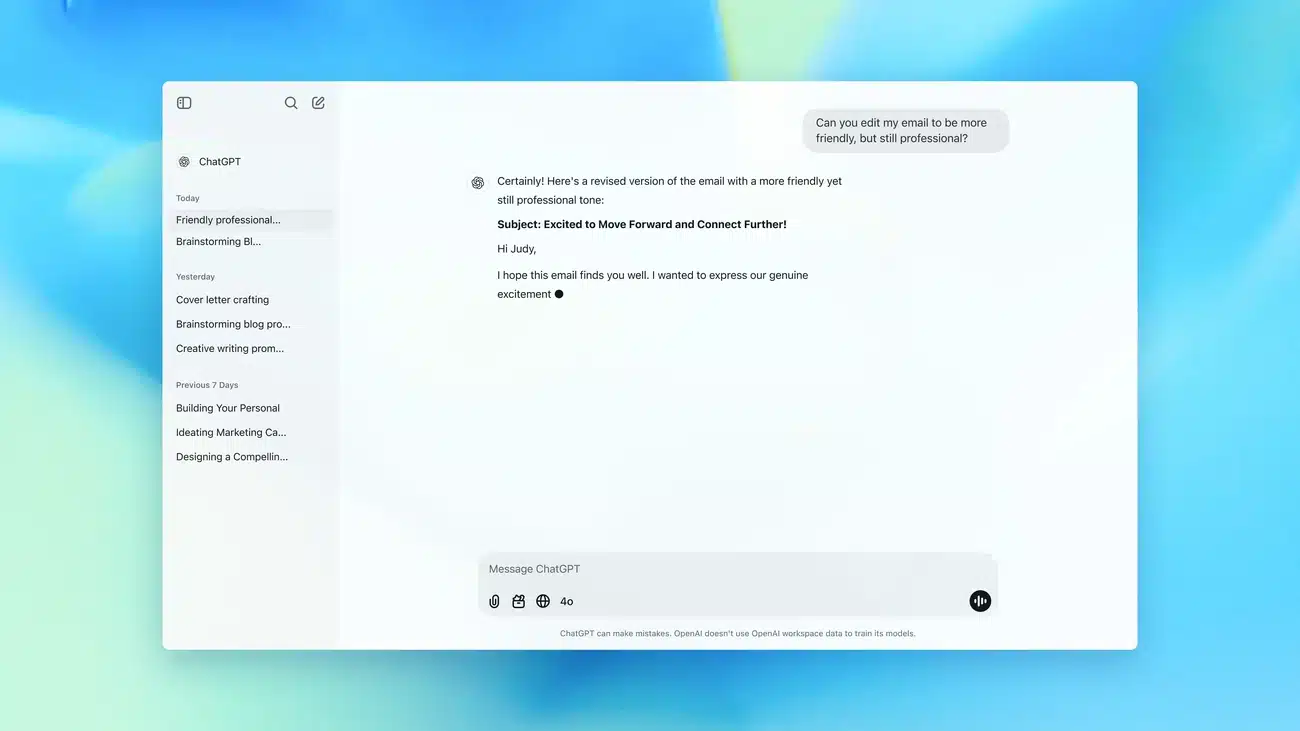
Image Source: ChatGPT
ChatGPT stands as one of my most-used AI tools, completely revolutionizing my content workflow since its release. As a language model developed by OpenAI, it uses advanced natural language processing to understand patterns and generate human-like responses to prompts.
Key Features of ChatGPT
ChatGPT excels at producing various content types from blog outlines to social media captions. Moreover, the latest versions include ChatGPT Images, which allows precise edits while preserving important details in photos. The model follows instructions more reliably than previous iterations, making it perfect for intricate compositions and improved text rendering. Additionally, ChatGPT now offers a dedicated Images feature within its interface for faster creative exploration.
Pros and Cons of ChatGPT
Pros:
- Saves significant time on content research and consolidation
- Helps automate repetitive writing tasks
- Assists with content planning and ideation
- Improves consistency across content pieces
- Provides quick proofreading and editing assistance
Cons:
- Content often lacks human touch and emotional depth
- Knowledge cutoff limitations (though less relevant in 2025)
- Possible quality inconsistencies requiring human oversight
- Potential plagiarism risks if used improperly
- Over-reliance may diminish original creativity
ChatGPT Pricing
ChatGPT offers a free version with basic access, while the Plus subscription costs $20 per month with advanced features. For businesses, plans start at $25-30 per user monthly depending on billing cycle. Enterprise plans include custom pricing with advanced security features, 24/7 support, and SLAs. Educational institutions have special access through ChatGPT for Teachers (free for verified K-12 educators) and ChatGPT Edu for universities.
Best Use Case for ChatGPT
Throughout my workflow, I’ve found ChatGPT most valuable for ideation and outlining rather than generating complete content. For instance, asking it to create structured outlines gives me an 80% head start compared to facing a blank page. Similarly, it excels at research consolidation, presenting complex information concisely without hours of manual reading. Finally, it helps refine my own writing through editing suggestions while preserving my unique voice.
Jasper AI
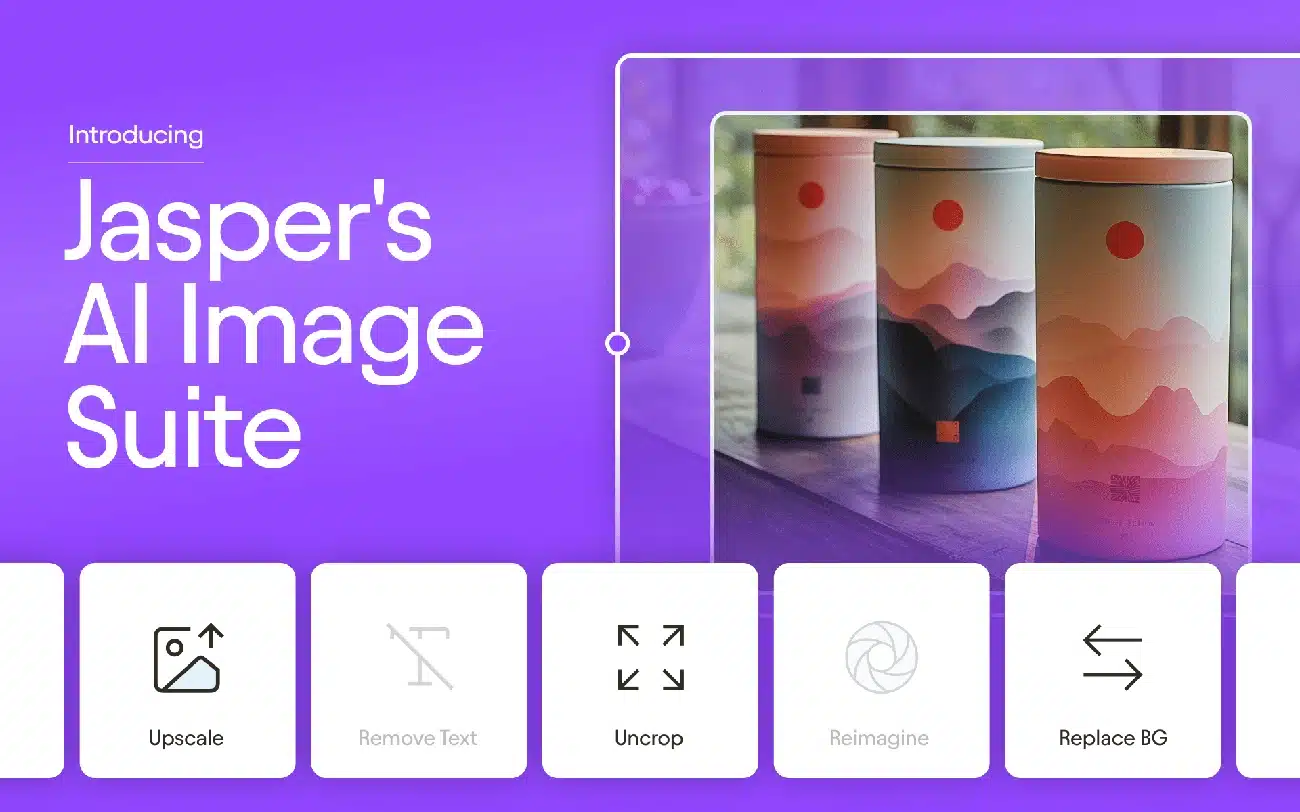
Image Source: Jasper.ai
Jasper AI positions itself as a purpose-built platform specifically designed for marketing teams that need to create and scale content. Unlike other general AI writing tools, Jasper focuses on brand consistency and marketing-specific outputs across multiple channels.
Key Features of Jasper AI
Jasper offers several standout capabilities that differentiate it from other content creation tools. Its Content Pipelines connect data, creativity, and distribution in one automated system. The Canvas feature provides a collaborative workspace for planning and creating content, while the Grid tool enables systematic content execution in spreadsheet format. Furthermore, Jasper includes an Image Suite with proprietary vision models for creating on-brand visuals. The platform’s IQ layer brings brand guidelines and marketing knowledge into every asset created.
Pros and Cons of Jasper AI
Pros:
- Exceptional time-saving capabilities for content creation
- Supports over 30 languages for global marketing needs
- Customizable brand voices ensure consistent tone
- Intuitive interface similar to familiar word processors
- Robust team collaboration features
Cons:
- Struggles with highly technical or complex topics
- Occasionally produces repetitive content
- Requires fact-checking of AI-generated information
- Additional cost for plagiarism detection
- Higher price point compared to basic AI writing tools
Jasper AI Pricing
Jasper offers three main pricing tiers. The Creator plan costs USD 39.00 monthly per seat and is designed for individuals with one brand voice. The Pro plan, priced at USD 59.00 monthly per seat, includes three brand voices and image generation tools. The Business plan offers custom pricing with unlimited brand voices, knowledge assets, and enterprise-grade security features. Each plan includes a 7-day free trial, with 20% discounts available for annual billing.
Best Use Case for Jasper AI
In particular, Jasper excels at handling high-volume content creation for marketing teams. The platform shines when scaling content production across multiple channels while maintaining brand consistency. Consequently, it’s ideal for enterprises creating product descriptions at scale, as evidenced by Adidas using Jasper to write 7,500 product descriptions in just 24 hours. The tool’s strength lies in automating repetitive content tasks without sacrificing quality or brand voice.
Copy.ai
Image Source: Copy.ai
As a go-to-market AI platform, Copy.ai stands out among content creation tools with its ability to automate complex processes. This powerful AI solution helps marketing teams produce high-quality content at unprecedented scale and speed.
Key Features of Copy.ai
Copy.ai offers comprehensive content generation capabilities across multiple formats. Its AI-powered system creates everything from blog content to social media posts and product descriptions. The platform includes customizable brand voice settings that maintain consistency across all content. Additionally, Copy.ai features workflow automation that codifies best practices and removes content creation bottlenecks. The tool also provides SEO optimization for content that drives organic traffic.
Pros and Cons of Copy.ai
Pros:
- Impressive time-saving automation for content creation
- Simple, intuitive interface accessible for all skill levels
- Supports over 25 languages for global content needs
- Integrates with thousands of apps through platforms like Zapier
- AIDA and PAS marketing frameworks built-in
Cons:
- Occasional content quality inconsistencies requiring editing
- May struggle with complex, technical topics
- Content sometimes lacks depth for sophisticated narratives
- Output quality depends heavily on input quality
- Fact-checking required for generated content
Copy.ai Pricing
Copy.ai offers various pricing tiers. The Chat plan starts at $29/month with 5 seats and unlimited words. The Agents plan costs $249/month including 10 seats and 10,000 workflow credits. For larger organizations, enterprise plans begin at $1,000/month with 75+ seats and 20,000+ workflow credits.
Best Use Case for Copy.ai
Copy.ai excels at supporting small businesses and marketing teams that need to scale content production efficiently. It’s particularly effective for creating product descriptions, social media content, and email marketing materials. Furthermore, it serves as an excellent brainstorming tool for content creators facing writer’s block.
Grammarly
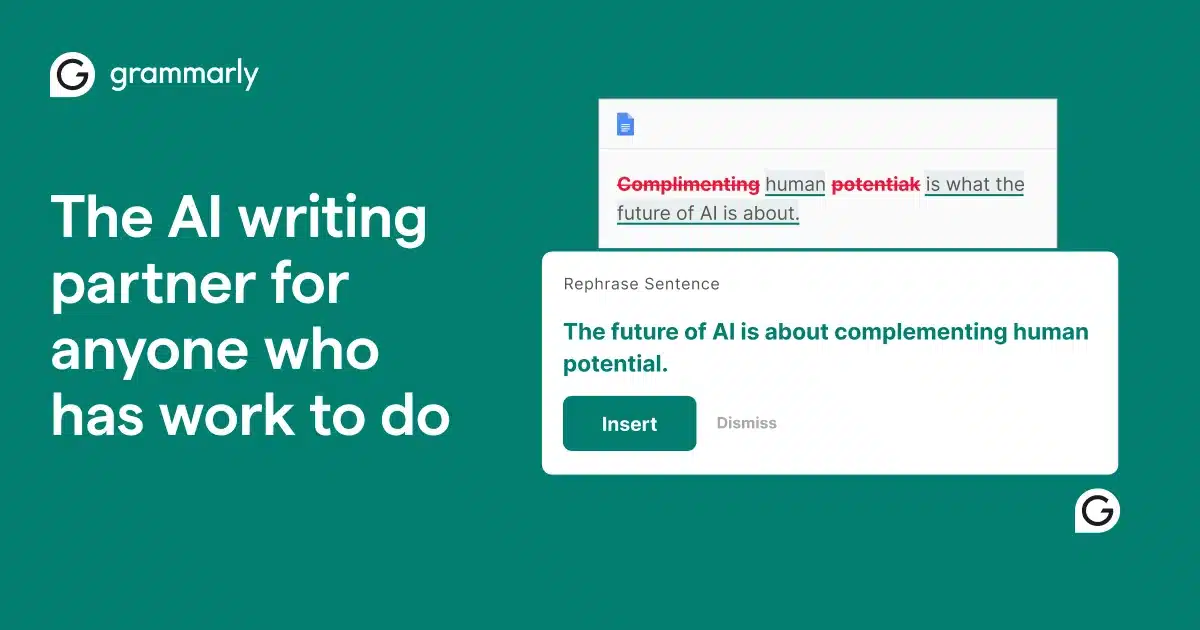
Image Source: Grammarly
Beyond generating content, I rely on Grammarly to polish and perfect everything I write. This AI-powered writing assistant ensures my content is not just error-free but also clear and engaging.
Key Features of Grammarly
Grammarly offers real-time grammar and spelling checks, full-sentence rewrites, and tone adjustments. The premium version includes plagiarism detection, AI content detection, and citation support. Notably, Grammarly now supports multiple languages including English, Spanish, French, German, Portuguese, and Italian.
Pros and Cons of Grammarly
Pros:
- Real-time grammar correction as you type
- Helpful explanations for suggested changes
- Customizable based on goals and audience
- Seamless integration with 500,000+ apps and websites
- Advanced tone and style adjustments
Cons:
- Occasional incorrect suggestions
- Limited functionality in free version
- Some platforms still lack full integration
- Can be overly prescriptive with style recommendations
- Monthly subscription costs add up over time
Grammarly Pricing
The free plan covers basic grammar checking. Grammarly Pro costs $12/month (annual billing) or $30/month (monthly billing). Enterprise plans offer custom pricing with additional security features and unlimited AI prompts.
Best Use Case for Grammarly
Grammarly excels at refining content after initial creation. Therefore, I use it to polish emails, documents, and social posts after drafting them with other AI tools mentioned earlier, ensuring consistent brand voice across all communication channels.
Canva AI
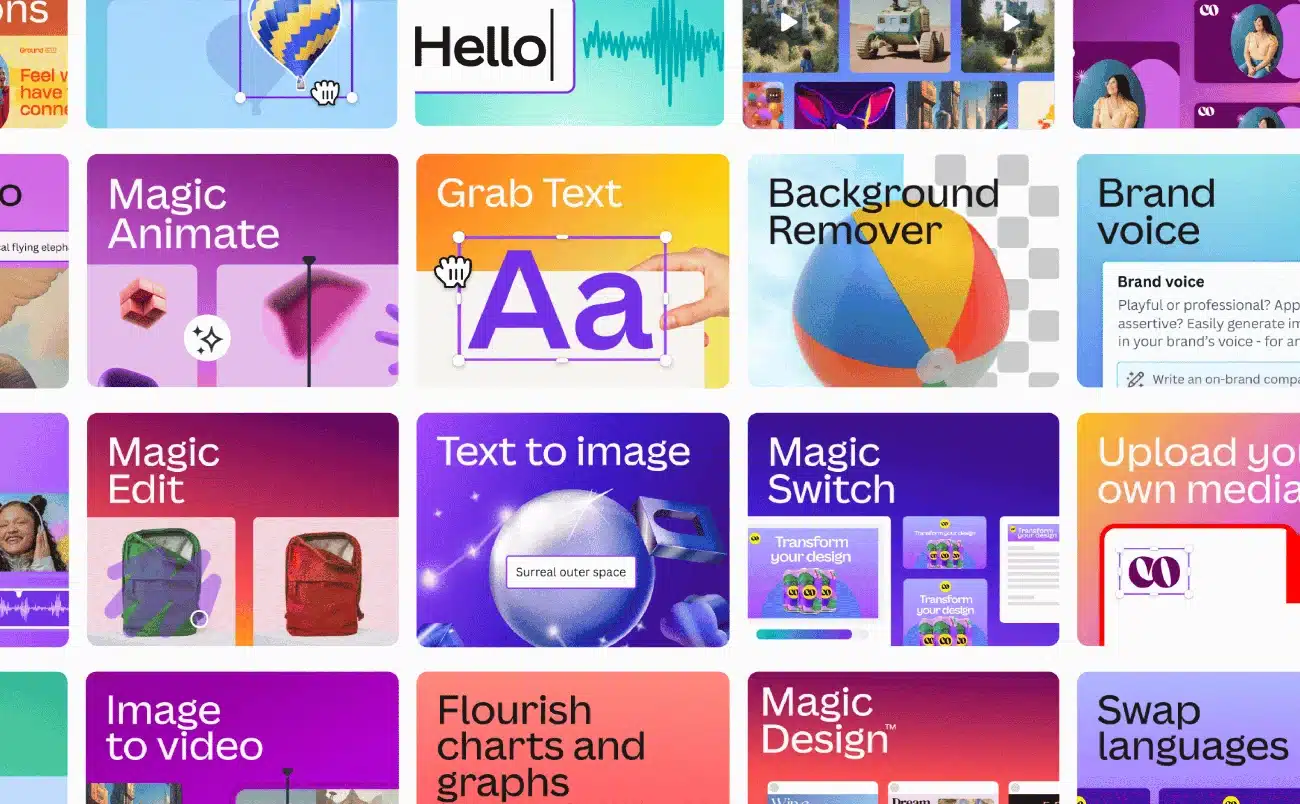
Image Source: Canva
For visual content creation, Canva’s AI suite transforms design workflows through its Magic Studio collection of AI tools. This integrated toolkit helps create designs, images, and videos with minimal effort.
Key Features of Canva AI
Canva AI includes Magic Design for generating templates from text prompts, Magic Media for creating images and videos from descriptions, and Magic Write for generating text content. Alongside these, it offers AI-powered editing tools like Magic Resize for format conversions, Background Remover, and photo editing features (Magic Grab, Magic Expand, Magic Eraser). The platform also includes AI voice generation and translation capabilities.
Pros and Cons of Canva AI
Pros:
- Seamlessly integrated within Canva’s familiar interface
- Connects with Brand Kit for consistent visual identity
- Simplifies design creation for non-designers
- Enables quick content adaptation across platforms
- Supports multiple languages including Hindi, Spanish and Japanese
Cons:
- Limited ability to refine AI-generated results
- Sometimes struggles with photorealistic quality
- Credit system can be confusing and restrictive
- Occasional brand consistency issues
- Data privacy concerns with third-party AI integrations
Canva AI Pricing
Free plan offers limited AI access. Canva Pro costs $120/year with high AI access (~500 uses/month) [1]. Teams plan runs $100/year per person with a three-person minimum ($300/year total) [2]. Enterprise plans include custom pricing with higher AI allowances.
Best Use Case for Canva AI
Essentially, Canva AI excels at quick visual content creation for social media, presentations, and marketing materials. It’s ideal when you need to scale content across multiple formats or when non-designers need to produce professional-looking materials independently.
Surfer SEO
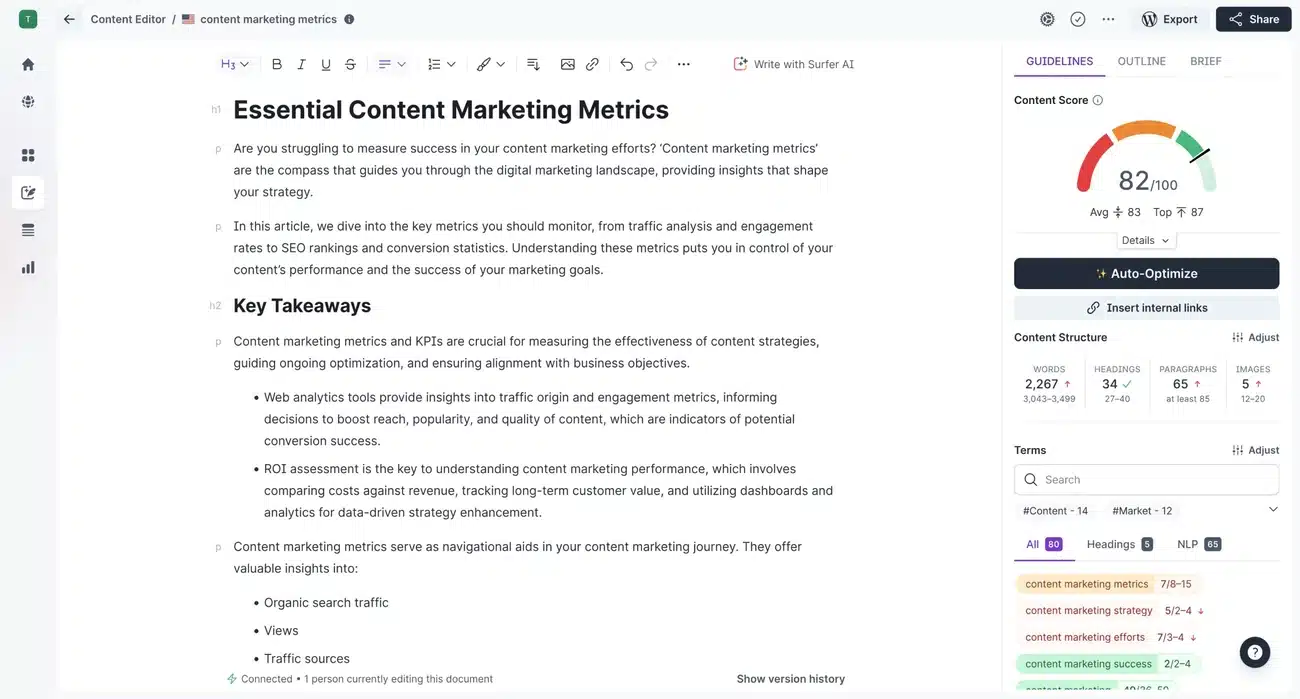
Image Source: Surfer SEO
Surfer SEO completes my content creation stack by optimizing everything I write for search engines. This data-driven tool analyzes top-ranking pages and provides real-time optimization guidance.
Key Features of Surfer SEO
Surfer’s Content Editor gives instant feedback on content structure, word count, and NLP-ready keywords with a Content Score that measures optimization quality [3]. The platform includes AI detection and humanization tools to differentiate between AI and human writing [3]. Meanwhile, the Outline Builder creates detailed article structures with unique headings and questions [3]. Auto-Optimize boosts Content Score in seconds, coupled with auto-internal linking for improved topical relevance [3].
Pros and Cons of Surfer SEO
Pros:
- Data-driven approach based on 500+ ranking signals [4]
- Real-time optimization feedback during writing
- Seamless Google Docs integration
- Comprehensive site auditing capabilities
- AI content detection and humanization
Cons:
- Occasionally suggests irrelevant keywords [5]
- Limited NLP queries in base plans [4]
- Higher price point compared to basic SEO tools
- Learning curve for new users
- Content quality still depends on input quality
Surfer SEO Pricing
Essential plan costs $99/month ($79/month annually) with 30 Content Editor credits [6]. Scale plan runs $219/month ($175/month annually) with 90 content editors [6]. Enterprise plans start from $999/month with custom features [7].
Best Use Case for Surfer SEO
Above all, Surfer excels at optimizing existing content to improve rankings. It’s ideal for content teams creating SEO-focused articles who need data-driven guidance rather than guesswork.
Descript
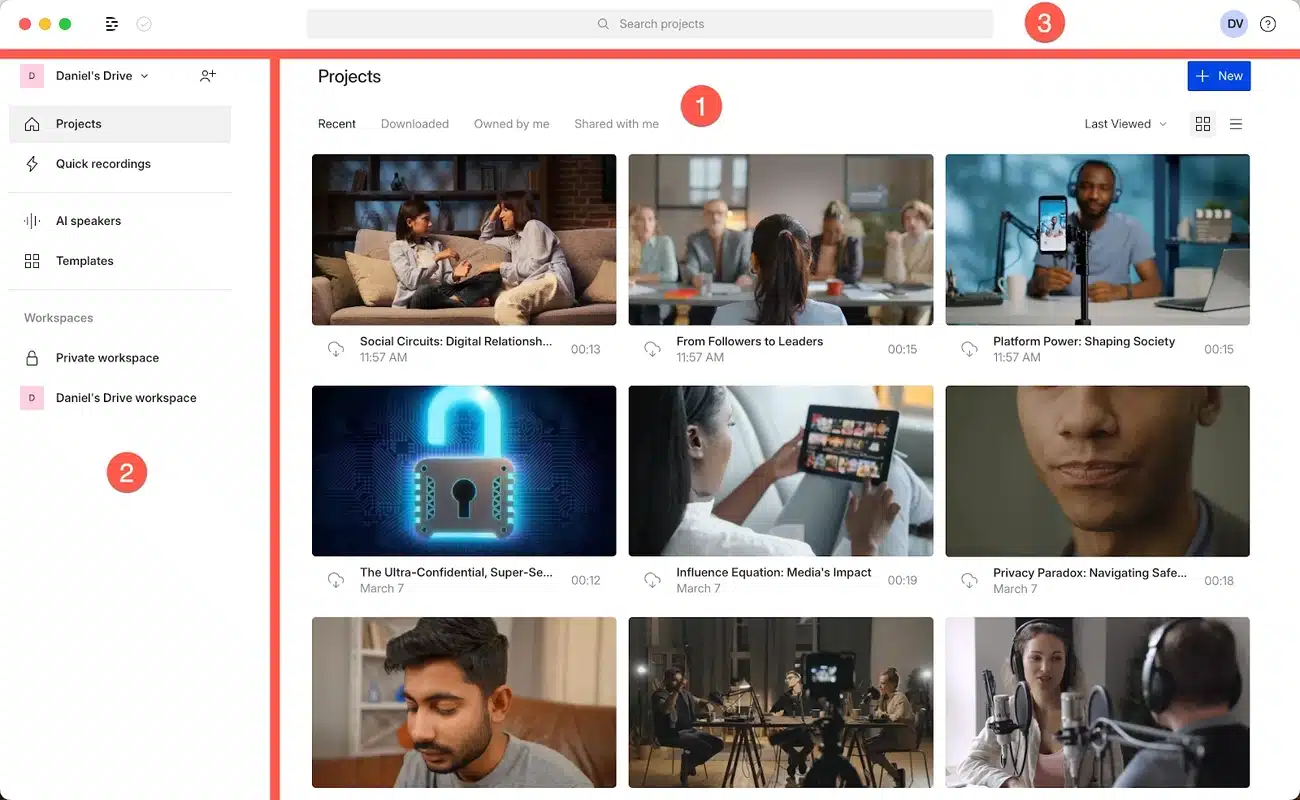
Image Source: Descript
Among my arsenal of content creation tools, Descript transforms audio and video editing through its innovative text-based approach. This platform enables editing media by simply modifying transcripts, making complex production accessible to non-technical creators.
Key Features of Descript
Descript offers text-based editing where you edit media by editing transcripts. The platform includes Studio Sound for noise reduction, Underlord AI assistant for intelligent editing, and one-click filler word removal. Furthermore, it provides screen recording capabilities, AI avatars, and voice cloning functionality that creates a voice replica in just 60 seconds.
Pros and Cons of Descript
Pros:
- Intuitive text-based editing interface
- Powerful AI tools like Studio Sound and Green Screen
- Automatic transcription with high accuracy
- Seamless collaboration features
Cons:
- Occasional processing slowdowns for complex projects
- Learning curve for first-time users
- Limited mobile functionality
- Resource-intensive on lower-end computers
Descript Pricing
The Free plan includes 1 hour of transcription monthly. Hobbyist costs $24/month with 10 media hours. Creator runs $35/month with 30 media hours. Business tier is $65/month with 40 media hours and team features.
Best Use Case for Descript
Descript excels at podcast editing, tutorial creation, and interview processing where spoken content dominates. It’s perfect for content creators seeking professional results without technical expertise.
Synthesia
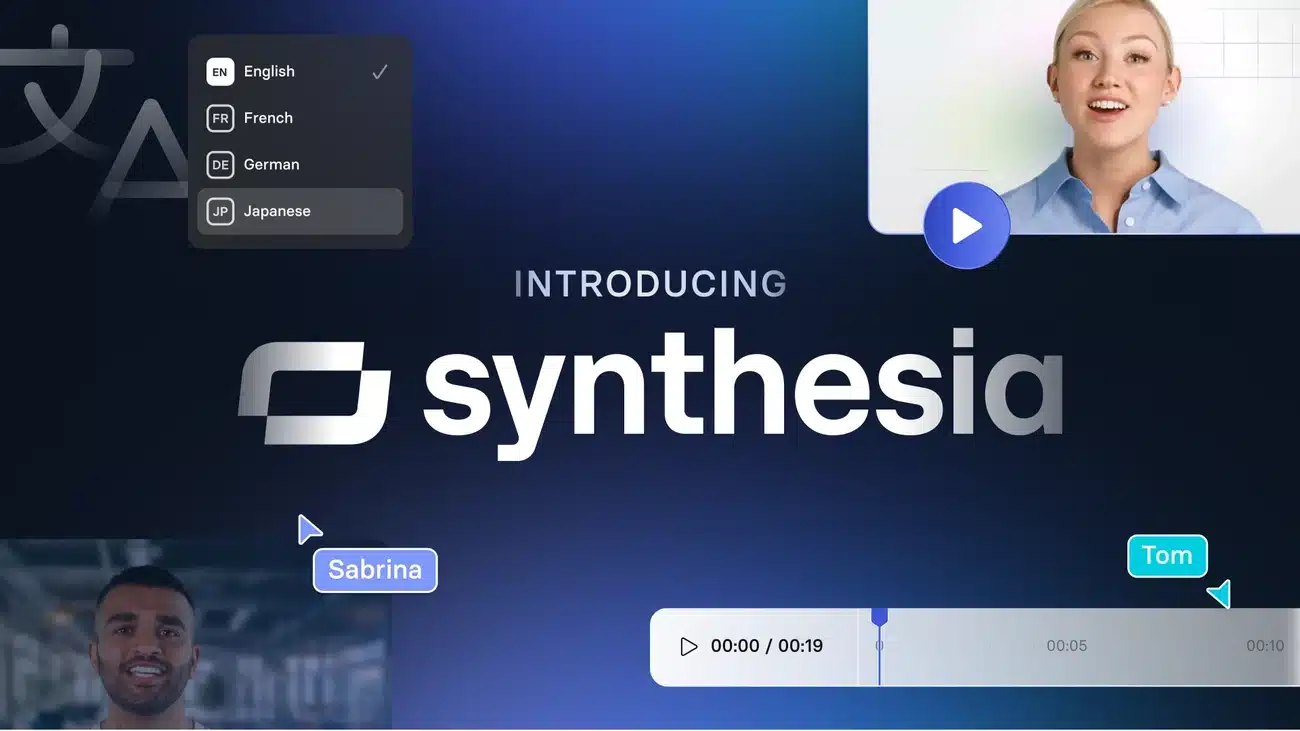
Image Source: Synthesia
When I need professional video content without filming equipment, Synthesia delivers impressive results. This AI video generator transforms scripts into polished videos featuring realistic digital presenters.
Key Features of Synthesia
Synthesia offers 230+ AI avatars representing diverse ages, ethnicities, and genders [8]. The platform supports text-to-speech in 140+ languages and accents [8], enabling global content creation. Its AI Screen Recorder perfectly transcribes voiceovers, removes pauses, and allows error correction [9]. Additionally, Synthesia includes 1-Click Translation for automatic video conversion into 80+ languages [9] and AI Dubbing that preserves speakers’ natural voices with perfect lip-sync [9].
Pros and Cons of Synthesia
Pros:
- Creates videos in minutes versus hours for traditional production
- Reduces video production costs by over 50% [10]
- Supports 140+ languages for global accessibility [10]
- No need for actors, cameras, or recording equipment [10]
- SOC 2, GDPR, and ISO 42001 compliant [11]
Cons:
- AI avatars occasionally lack emotional nuance [8]
- Not ideal for cinematic storytelling requiring emotional depth [8]
- Limited customization options in lower-tier plans
- Requires well-crafted scripts for optimal results [10]
- Prohibited for certain advertising applications [12]
Synthesia Pricing
The free plan includes 3 minutes of video monthly with 9 stock avatars [13]. Starter plan costs $29/month ($18/month annually) with 125+ avatars and 1,200 credits [14]. Creator plan runs $89/month ($64/month annually) with 180+ avatars and 3,600 credits [14]. Enterprise plans offer custom pricing with unlimited video minutes [14].
Best Use Case for Synthesia
In practice, Synthesia excels at creating training videos, product demonstrations, and customer education content. It’s particularly valuable for multilingual content, as evidenced by users reporting “100 hours of translation done in 10 minutes” [11].
Pictory

Image Source: Pictory
Pictory has become my secret weapon for video creation without the hassle of traditional production. This AI-powered platform automatically transforms text, scripts, and long-form content into polished videos in minutes.
Key Features of Pictory
Pictory’s script-to-video feature converts written text into complete videos by matching AI-selected visuals from its library of over 3 million royalty-free assets [15]. The platform excels at text-based editing, allowing users to edit videos as easily as editing a document [15]. Its video summarization capability automatically creates short highlights from lengthy content like webinars or podcasts [16]. Beyond these, Pictory offers auto-captioning, brand customization tools, and recently added an audio-to-video workflow that transforms voice recordings into complete visual presentations [15].
Pros and Cons of Pictory
Pros:
- Creates professional videos in minutes rather than hours
- Requires no technical video editing skills
- Automatically adds captions, improving accessibility
- Seamlessly converts blog posts and articles into video content
- Extensive media library with millions of stock assets [15]
Cons:
- Storyboard editor can feel overly simplified for advanced creators [16]
- Inherent limitations when using stock footage and images [16]
- Occasional issues with aspect ratio adjustments for different platforms [17]
- Some bugs in the frame length control logic [17]
- Limited permanent free options [15]
Pictory Pricing
Starter plan costs $19/month (annually) with 200 video minutes [18]. Professional plan runs $29/month (annually) offering 600 minutes and advanced features like AI-assisted video scripting [18]. Teams plan is $99/month (annually) with 1,800 minutes and collaboration tools [18]. Enterprise customers receive custom pricing with unlimited brand kits and priority support [18].
Best Use Case for Pictory
Pictory especially shines for content repurposing—turning blog posts, articles, and podcasts into engaging video content. Likewise, social media managers find it invaluable for creating platform-specific videos with auto-captioning, as 85% of social media videos are watched without sound [19]. Educational professionals and marketers consistently leverage Pictory to transform complex information into accessible visual formats [15].
Lumen5

Image Source: Lumen5
Lumen5 democratizes video creation through its AI-powered platform that transforms text into engaging visual content. I frequently use it to convert blog posts into short videos without technical editing skills.
Key Features of Lumen5
Lumen5 automatically transforms blog posts and articles into video storyboards within minutes. The platform provides access to 50+ million royalty-free assets including photos, videos, and music [20]. Its drag-and-drop interface requires zero video editing experience, making it accessible for marketing assistants [20]. Beyond content conversion, Lumen5 offers multi-platform optimization that automatically resizes videos for Instagram Stories, LinkedIn posts, and YouTube thumbnails [20].
Pros and Cons of Lumen5
Pros:
- Creates professional videos in under 5 minutes [21]
- Intuitive drag-and-drop interface requiring minimal training
- Brand kit integration for consistent visual identity
- Auto-summarization of text content into video format
- Multi-platform optimization for various social channels
Cons:
- Generic output following predictable patterns [20]
- Limited voice control for timing and emphasis [20]
- Audio synchronization issues requiring re-rendering [20]
- Template lock-in that often breaks layouts mid-project [20]
- Rendering bottlenecks during peak hours (10-15 minutes for 60-second videos) [20]
Lumen5 Pricing
Free Community Plan includes watermarked videos and 5 videos monthly [20]. Basic Plan costs USD 19.00/month with 720p resolution [20]. Starter Plan runs USD 59.00/month with 1080p resolution [20]. Professional Plan is USD 149.00/month with full features [20].
Best Use Case for Lumen5
Although Lumen5 works for various content types, it excels at small business announcements, educational content, and social media experiments [20]. The tool shines when repurposing existing blog content into engaging social videos with minimal effort.
Claude AI
Image Source: claude.ai
As an AI assistant developed by Anthropic, Claude AI offers exceptional natural language processing capabilities alongside ethical design principles. This powerful tool excels at document analysis, content creation, and personalized assistance through its Constitutional AI framework.
Key Features of Claude AI
Claude processes text, images, and audio inputs through its multimodal design [22]. The platform includes Claude Projects, which creates reusable AI assistants tailored to specific content needs [23]. Furthermore, it features a 200,000 token context window—roughly 350 pages of text—allowing for comprehensive document analysis [24]. The system currently offers three specialized models: Haiku for speed, Sonnet for balance, and Opus for complex reasoning [25].
Pros and Cons of Claude AI
Pros:
- Strong ethical design with built-in safety protocols [26]
- Excellent document summarization capabilities
- No data retention beyond 30 days [24]
- High-quality language generation across topics
Cons:
- Limited image generation compared to competitors [24]
- No internet browsing capabilities [24]
- Usage limits that reset every five hours [27]
- Occasional over-cautious responses [26]
Claude AI Pricing
Opus 4 costs $15.00 per million input tokens and $75.00 per million output tokens [22]. Sonnet 4 is priced at $3.00 per million input tokens and $15.00 per million output tokens [22]. Haiku 3.5 offers the lowest rates at $0.80 per million input tokens and $4.00 per million output tokens [22]. Batch processing reduces costs by up to 50% [22].
Best Use Case for Claude AI
Claude excels at creating personalized writing assistants through custom instructions and uploaded knowledge files [23]. Indeed, it performs exceptionally well handling complex document analysis and creating long-form content with consistent brand voice [23]. Content creators value Claude’s ability to critique its own work, enabling iterative improvement without external feedback [23].
Notion AI
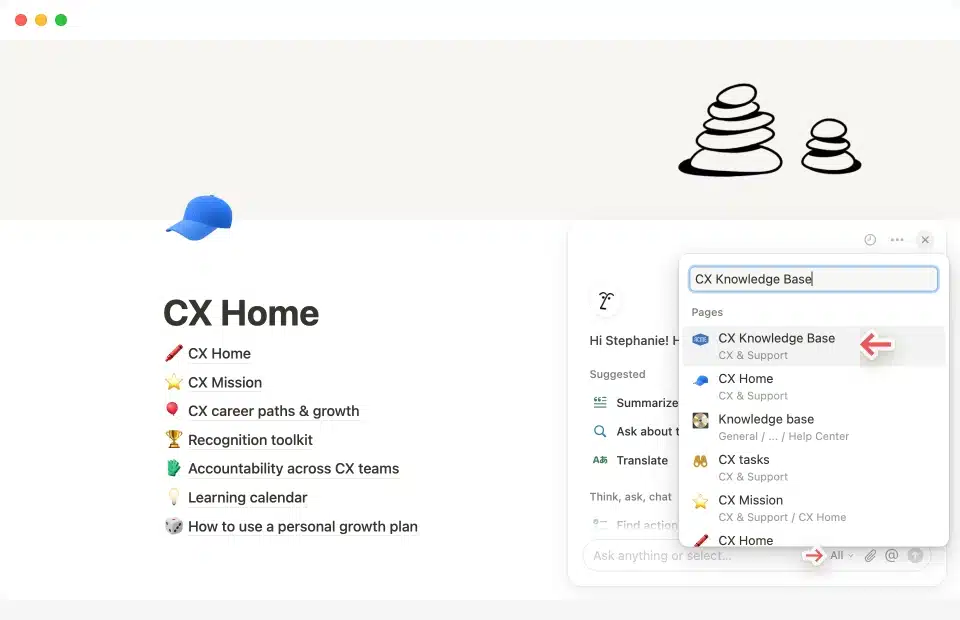
Image Source: Notion
Integrating AI capabilities directly into workspace management, Notion AI serves as an intelligent assistant embedded within the Notion ecosystem. This tool enhances productivity by automating routine tasks and providing contextual assistance exactly where you need it.
Key Features of Notion AI
Notion AI answers questions based on information stored in your workspace [28]. Its writing tools help draft content, fix grammar, and change tone [29]. The platform creates ready-to-use databases from simple text descriptions [29]. In fact, it connects with other apps like Slack and Google Drive to pull information from multiple sources [30]. Plus, custom AI blocks can generate specific content types based on your prompts [31].
Pros and Cons of Notion AI
Pros:
- Seamlessly integrated within Notion’s interface [30]
- Reduces time spent on repetitive tasks [32]
- Supports content summarization and idea generation [29]
- Allows for customized AI prompts within databases [33]
Cons:
- Primarily beneficial for existing Notion users [28]
- Limited specialization for specific departments like customer support [30]
- Requires Business plan for full access [34]
- Occasional usage limits under fair use policy [34]
Notion AI Pricing
Firstly, Notion AI comes integrated with Business ($20/month/user) and Enterprise plans [34]. Conversely, Free and Plus users only receive limited trial access [34]. Users on Free/Plus plans can add AI functionality for an additional $8/month per user [28].
Best Use Case for Notion AI
Notion AI excels at workspace knowledge management and internal content creation. Subsequently, it’s ideal for teams already invested in Notion for documentation and project planning [28]. The tool performs exceptionally well for meeting notes, internal documentation, and streamlining workflows within the Notion ecosystem.
Writesonic
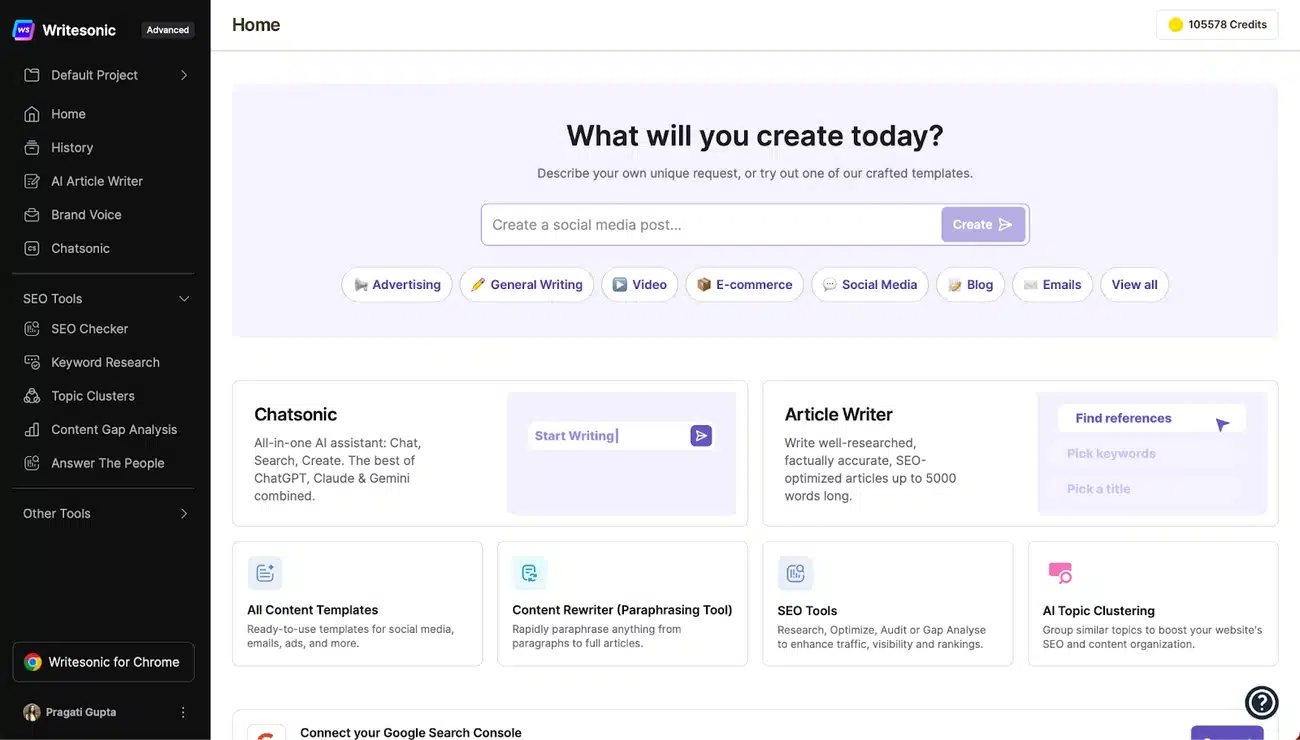
Image Source: Writesonic
Writesonic delivers an all-in-one content creation platform focused on generating SEO-optimized material at scale. This versatile tool combines AI writing capabilities with search engine optimization features in one comprehensive package.
Key Features of Writesonic
Writesonic’s AI Article Writer generates 2000+ word SEO-optimized articles in under a minute [35]. The platform offers 60+ AI templates for various content types [36], including blog posts, landing pages, and social media content. Plus, Chatsonic serves as an AI assistant powered by Google Search for real-time information [37]. Additionally, Writesonic integrates with WordPress, Zapier, and SEMrush for streamlined workflows [36].
Pros and Cons of Writesonic
Pros:
- Creates long-form content in 30-40 seconds [35]
- Offers blog topic idea generation from keywords [37]
- Includes AI image generation for article illustrations [37]
- Features bulk content generation for large-scale production [37]
- Provides 98% positive reviews according to user feedback [36]
Cons:
- Credit-based pricing system can feel restrictive [38]
- Occasionally produces redundant sentences [38]
- Keyword tool struggles with long-tail keywords [39]
- Content organization in folders isn’t intuitive [39]
- Templates for short-form content less robust than long-form [39]
Writesonic Pricing
Free plan offers limited access with no credit card required [40]. Lite plan starts at $39/month annually ($49 monthly) with 15 articles monthly [41]. Professional plan costs $199/month annually ($249 monthly) with 100 articles monthly [41]. Enterprise plan includes custom pricing with unlimited usage [41].
Best Use Case for Writesonic
Writesonic excels for marketing teams needing high-volume content creation, hereafter generating product descriptions at scale and SEO-optimized blog posts [37].
Conclusion
AI tools have fundamentally transformed content creation workflows since their emergence. Throughout this article, I’ve shared 13 AI content creation tools that actually deliver results rather than empty promises. Each tool serves a specific purpose within my content creation ecosystem – ChatGPT for ideation and research, Jasper AI for marketing-focused content, Copy.ai for small business scale, Grammarly for polishing, Canva AI for visuals, and specialized tools like Surfer SEO for optimization.
Video creation also benefits significantly from AI assistance. Descript, Synthesia, Pictory, and Lumen5 all reduce production time dramatically while maintaining professional quality. Meanwhile, Claude AI and Notion AI excel at workspace management and personalized assistance, whereas Writesonic stands out for SEO-optimized content at scale.
The most effective approach combines these tools strategically based on your specific needs. Writers might prioritize ChatGPT and Grammarly, visual creators would benefit from Canva AI and Synthesia, while marketing teams could leverage Jasper AI and Surfer SEO together.
These AI assistants won’t replace human creativity but instead amplify it. They handle repetitive tasks, overcome creative blocks, and scale production while you focus on strategy and creative direction. The real magic happens when you find the right combination of tools for your workflow.
Testing these tools yourself remains essential. Many offer free plans or trials, allowing experimentation without significant investment. Start with one or two that address your biggest content challenges, then expand your toolkit as needed.
AI content creation continues evolving rapidly. The tools highlighted today represent the current state of technology in 2025, yet innovation accelerates daily. Staying adaptable and willing to incorporate new tools as they emerge will keep your content creation process efficient and effective.
What AI content creation tools have transformed your workflow? The journey toward content creation excellence never truly ends – it simply becomes more efficient with the right AI companions.
References
[1] – https://www.canva.com/en/pricing/
[2] – https://www.eesel.ai/blog/canva-ai-pricing
[3] – https://surferseo.com/
[4] – https://www.demandsage.com/surfer-seo-review/
[5] – https://bloggingwizard.com/surfer-seo-review/
[6] – https://surferseo.com/pricing/
[7] – https://www.affiliatebooster.com/surfer-seo-pricing/
[8] – https://aurisai.io/blog/create-videos-with-ai-avatars-synthesia/
[9] – https://www.synthesia.io/features
[10] – https://aiforfuture.medium.com/why-synthesia-ai-video-is-a-game-changer-for-content-creators-9e1ceea492af
[11] – https://www.synthesia.io/case-studies
[12] – https://www.commlabindia.com/blog/synthesia-video-development-pros-cons
[13] – https://skywork.ai/blog/ai-video/synthesia-free-plan-features-and-limits-explained-2025/
[14] – https://www.synthesia.io/pricing
[15] – https://cybernews.com/ai-tools/pictory-ai-review/
[16] – https://wyzowl.com/pictory-review
[17] – https://www.softwareadvice.com/video-making/pictory-profile/reviews/
[18] – https://masterblogging.com/pictory-pricing/
[19] – https://pictory.ai/text-to-video
[20] – https://autoposting.ai/lumen5-review/
[21] – https://lumen5.com/learn/content-creator/
[22] – https://www.cloudzero.com/blog/claude-pricing/
[23] – https://alitu.com/creator/content-creation/ai-writer-claude-projects/
[24] – https://www.ibm.com/think/topics/claude-ai
[25] – https://www.anthropic.com/news/claude-3-family
[26] – https://digitaldefynd.com/IQ/pros-cons-of-claude/
[27] – https://www.datastudios.org/post/claude-pricing-2025-full-guide-to-free-pro-team-and-max-plans-with-updated-limits
[28] – https://www.eesel.ai/blog/notion-ai
[29] – https://www.notion.com/help/guides/everything-you-can-do-with-notion-ai
[30] – https://www.eesel.ai/blog/notion-ai-use-in-workspace
[31] – https://www.notion.com/help/guides/organize-your-everyday-life-with-notion-ai
[32] – https://www.rosemet.com/pros-and-cons-of-notion/
[33] – https://medium.com/@circecreates/coolest-use-cases-of-notion-ai-for-creators-a3e155ab6544
[34] – https://userjot.com/blog/notion-pricing-2025-plans-ai-costs-explained
[35] – https://todaytesting.com/writesonic-pricing/
[36] – https://writesonic.com/blog/ai-content-writing-tools
[37] – https://writesonic.com/blog/content-creation-tools
[38] – https://www.softwareadvice.com/marketing/writesonic-profile/reviews/
[39] – https://phillipstemann.com/writesonic-review/
[40] – https://writesonic.com/blog/free-ai-content-generator
[41] – https://www.eesel.ai/blog/writesonic-pricing